Meta Muse is a personal AI agent that can use a browser, work across connected apps, keep running after its user closes the app, and return for approval before certain actions. For a website, that creates a different traffic question from the familiar “human or script?” test. A Muse session may be automated, user-directed, partly supervised, or acting through a normal browser with valid account credentials.
The practical detection target is therefore not a single agent label. A website needs to determine what it can verify about the request, device, session, account, and intended action—and then decide how much access that evidence should permit.
What Is Meta Muse and What Can It Do?
Meta describes Muse as a personal AI agent that runs on a dedicated Muse Secure VM. It can open a browser, use connected applications, fill out forms, coordinate longer projects, and ask for approval before sensitive actions such as sending an email or making a purchase. The official Muse product page also positions it as a persistent agent that can work on goals and use a secure computer shared by the person and the agent.
That operating model separates Muse from a conventional chatbot. A chatbot mainly returns an answer inside a conversation. Muse can carry context into external systems and produce side effects: reading a page, submitting a form, changing a reservation, creating content, or preparing a transaction.
For website operators, “detecting Meta Muse” can refer to several different questions:
| Detection target | What the site is actually asking | Useful evidence |
|---|---|---|
| Claimed identity | Does the client say it is Muse? | headers, client labels, declared metadata |
| Technical origin | Does the request come from infrastructure associated with the claimed service? | network and request provenance when available |
| Automation | Does the session behave like software rather than ordinary human interaction? | browser, device, environment, timing, navigation, interaction patterns |
| Business risk | Is the action acceptable for this account, endpoint, and moment? | login state, velocity, transaction value, inventory, account history, policy |
These targets are related, but they are not interchangeable. A believable identity does not prove that a purchase is authorized. An automated session is not automatically malicious. A human-looking browser can still be driven by an agent.
The detection objective should be defined before signals are collected. A content site may only need to distinguish ordinary reading from large-scale extraction. A marketplace may care about inventory holds, purchase velocity, or automated repricing. An account platform may focus on credential use, recovery changes, and privilege escalation. Each objective creates a different ground truth: provider identity, automation likelihood, account misuse, or transaction risk. Calling all four “Muse detection” hides these differences and produces rules that are difficult to test.
It is also useful to separate an observation from a conclusion. A stable cloud-browser profile is an observation. “This is Meta Muse” is an identity conclusion. “This action is unsafe” is a risk conclusion. Keeping those levels separate lets a team update one inference when provider behavior changes without rebuilding the entire control policy.
For broader context on the change from conversational AI to acting agents, see GeeTest’s analysis of Meta Muse and website security.
Why Is Meta Muse Difficult to Detect Reliably?
Muse is difficult to identify from one request because the web does not expose a universal “AI agent” field. The main sources of uncertainty can be summarized as follows:
| Detection obstacle | Why a single rule fails | What a website must preserve |
|---|---|---|
| Claimed identity | A User-Agent or custom header can be copied; a provider label is not proof by itself. | Provenance evidence and verification result, with failed checks treated as uncertainty. |
| Ordinary browser surface | Muse may expose normal APIs, cookies, screen properties, and network behavior. | A combined browser fingerprint, not one brittle browser attribute. |
| Mixed human and agent control | The session can run independently, pause for approval, or hand control back to a person. | Sequence-level evidence that distinguishes automation, supervision, and the consequential action. |
| Credentials versus permission | A valid login does not prove that a reset, checkout, export, or inventory hold is allowed. | Account history, endpoint sensitivity, velocity, value, and business policy. |
| Changing infrastructure and time windows | Browser versions, cloud infrastructure, connectors, and task timing evolve; one page view can hide a longer pattern. | Continuously evaluated bot detection across session, device, account, and endpoint windows. |
| False-positive cost | Assistive technology, password managers, enterprise scripts, and efficient users can share automation traits. | Independent signals, explainable decisions, and a recovery path instead of an automatic block. |
How Can Websites Detect Meta Muse Activity?
Websites can detect suspicious or agent-like Muse activity by combining five evidence layers. No layer has to make the final decision alone.

- Check request and network provenance. Record declared identity, source network, TLS and HTTP characteristics, and any provider-published verification signal. Treat a mismatch as uncertainty, not automatic guilt.
- Measure the device and browser environment. Collect stable, privacy-conscious signals that reveal impossible combinations, rapid environment changes, automation frameworks, emulation, or many accounts sharing the same device pattern.
- Evaluate session behavior. Look at navigation order, dwell time, pointer and keyboard interaction, form completion, retry patterns, concurrency, and whether the session follows a humanly plausible path.
- Add account and business variables. A read-only page visit is not equivalent to a password reset, checkout, high-value reservation, bulk export, or inventory hold. Add account history, action value, velocity, and endpoint sensitivity.
- Choose a proportional response. Low-risk sessions may proceed. Uncertain sessions may be monitored or rate-limited. Higher-risk actions can receive step-up verification, manual review, isolation, or a block.
The implementation should preserve a compact event record for every decision: the endpoint, asserted identity, verification result, device continuity, behavioral features, account context, business variables, policy version, and action taken. This makes the outcome explainable and allows security teams to distinguish a bad rule from a changing agent pattern. Raw client attributes should not become permanent allow or block rules without server-side corroboration.
Detection quality should be evaluated against business outcomes rather than a self-reported “Muse accuracy” score. Useful measures include confirmed abuse caught, legitimate sessions challenged, recovery success, conversion impact, support contacts, and the time required to investigate a decision. These metrics reveal whether the policy is reducing risk or simply moving friction to genuine users.
This method is more durable than a fixed Muse rule because it asks what the traffic is doing and what the business stands to lose. A useful bot detection solution should also retain evidence for tuning false positives instead of producing only a binary label.
How GeeTest Turns Signals Into a Risk Decision
GeeTest fits at the detection and control layer. CAPTCHA and Device Fingerprinting can observe relevant user-device, behavior, and environment signals. The Business Rules Engine can combine those signals with variables from the protected business flow—such as account state, endpoint, request velocity, transaction value, or inventory pressure.
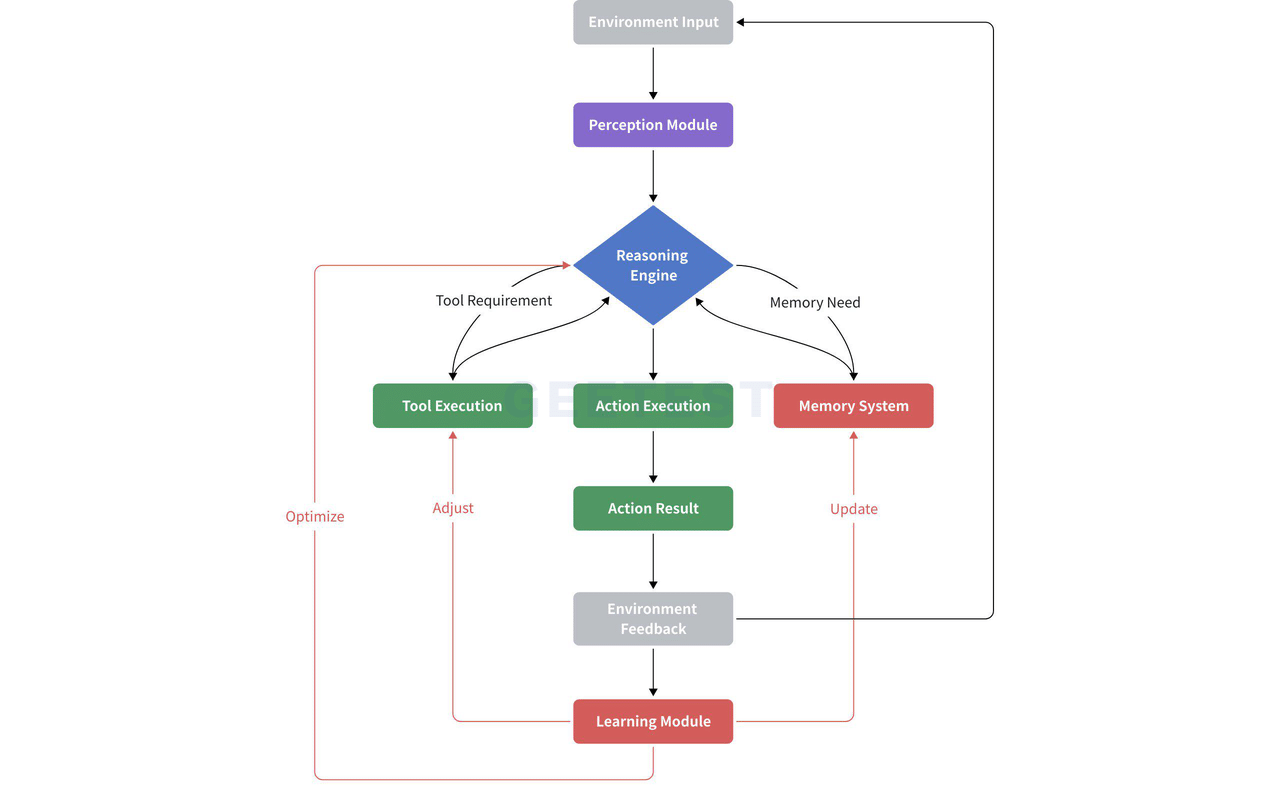
The resulting system is not limited to asking whether a request “looks like Muse.” It can evaluate whether the current interaction resembles a human user, known automation, or abnormal traffic; apply policy to the specific business action; and route the request to allow, observe, verify, limit, isolate, or block.
This matters because risk control has to stay close to the business. The same agent-like pattern can be acceptable while reading public content and unacceptable while creating hundreds of accounts or holding scarce inventory. GeeTest’s device intelligence approach provides useful context for building that continuous decision.
AI-agent marking is also an emerging direction: making likely AI-origin traffic observable as a distinct signal. It should be treated as a developing capability area, not as a claim that a universal Meta Muse signature verifier or generally available agent label already exists.
Start Detecting Meta Muse and Other Agent Traffic
Start with one business flow where automation creates a measurable risk, such as sign-up, login, checkout, reservation, high-value form submission, or account recovery.
- Map the protected endpoints and separate read-only activity from actions that change data, money, access, or inventory.
- Integrate client-side collection and perform server-side result verification so the decision cannot be replaced by a browser-only flag.
- Add device, environment, behavior, account, and business variables to the risk policy.
- Use an adaptive CAPTCHA only when the risk level justifies user friction, with a recovery path for legitimate users.
- Run in observe mode, compare outcomes with fraud and support data, then tune thresholds before broader enforcement.
During the first observation period, label decisions by endpoint and consequence, not only by suspected agent family. Review samples of allowed, challenged, and blocked sessions with fraud, product, and support owners. Once the team agrees on acceptable error and recovery rates, promote only the stable rules to enforcement and keep provider-specific indicators as replaceable evidence.
You can create a GeeTest account to begin a controlled evaluation and contact GeeTest Sales for integration design, deployment options, and policy review across web, app, and API traffic.
Final Takeaway
Meta Muse is a persistent personal AI agent with a cloud computer and browser, but a website rarely receives enough evidence to identify it perfectly from one request. The stronger approach is to verify whatever origin evidence exists, measure device and session behavior, add business context, and make a proportional risk decision. GeeTest risk-based verification can support that response layer when uncertainty and consequence justify a challenge. The model remains useful even when Muse changes its browser, infrastructure, or identity signals.
FAQ
1. Can a website identify every Meta Muse request exactly?
No. Exact identification depends on the identity evidence exposed by the provider and the request path. A site can often classify automation or risk with layered signals even when it cannot prove the specific product name.
2. Is a Meta Muse User-Agent enough for allowlisting?
No. A User-Agent is a claim and can be copied. Use provider-backed verification when available, then apply endpoint and business policy before allowing sensitive actions.
3. Should websites block all Meta Muse traffic?
Usually not. Public reading, user-requested assistance, bulk extraction, account creation, and payment actions have different consequences. Use tiered controls rather than one global rule.
4. Where does CAPTCHA help?
CAPTCHA is a response layer, not the entire detector. It is most useful as step-up verification for uncertain or high-risk sessions after device, behavior, environment, and business signals have been evaluated.